
Carbon Steel Round Bar Manufacturer.
Takumi Special Steel manufactures carbon steel round bars for machining, fabrication and general engineering requirements, with enquiries reviewed against grade, standard, diameter, length, tolerance, supply condition, finish, heat-treatment requirements where applicable, testing and documentation.
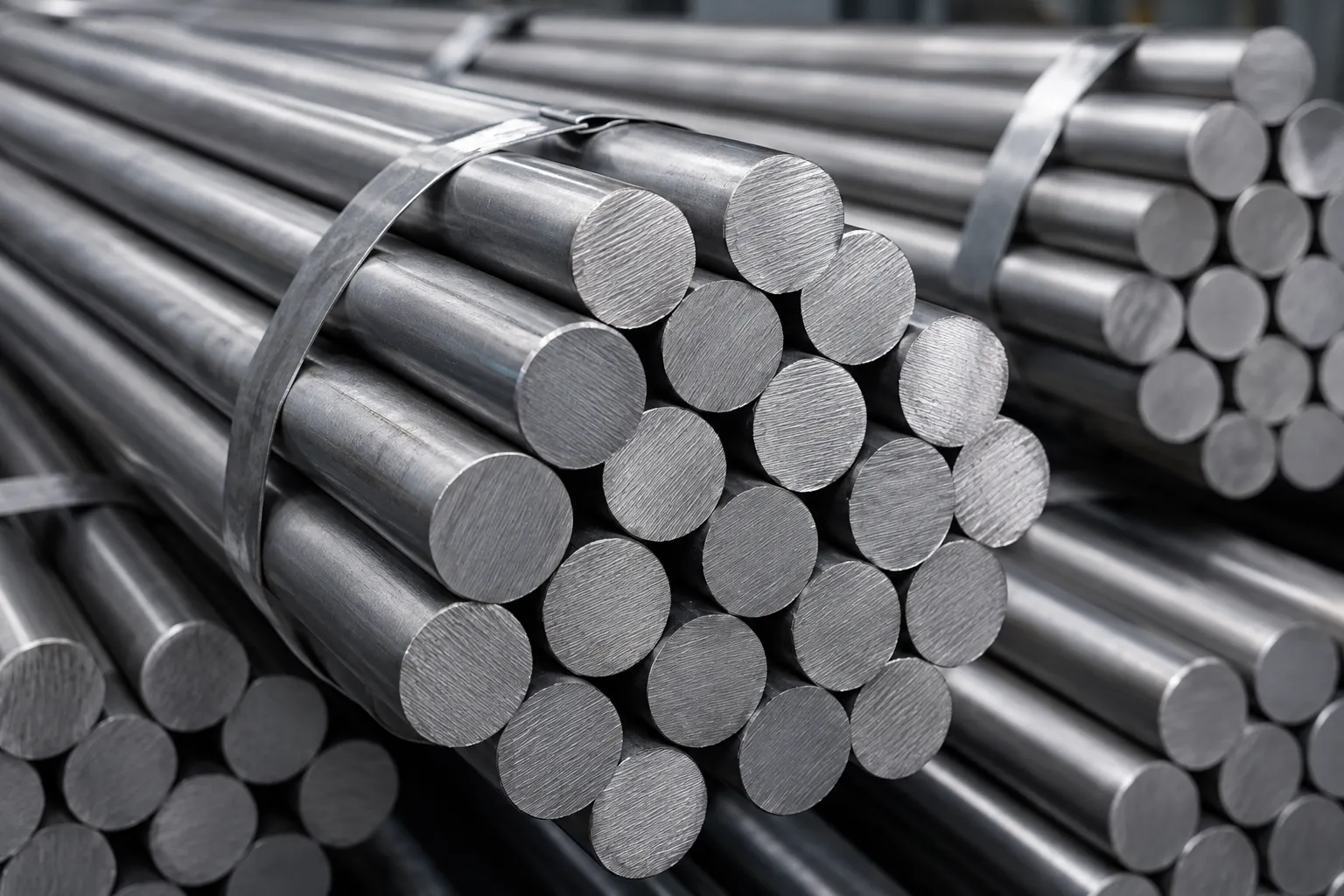
Carbon steel round bars manufactured around defined engineering requirements.
Carbon steels cover a broad range of compositions and property levels. Changes in carbon content and grade design can affect strength, hardness, machinability, fabrication behaviour, weldability and heat-treatment response, so the material should be selected against the actual component and service requirement.
Takumi’s manufacturing enquiries begin with the required carbon steel grade and governing specification, followed by diameter, length, tolerance, supply condition, finish, heat treatment where applicable, testing, documentation, quantity and application requirements.
Understand the carbon range before selecting a grade.
The examples below are common industry grade references used to explain carbon-steel families. They do not confirm that Takumi currently manufactures every listed grade. Confirm current manufacturing capability before specifying an individual grade.
Low Carbon Steel Round Bars
Low-carbon steels are commonly considered for machining, forming, fabrication and general engineering components where moderate strength and practical manufacturability are important.
Medium Carbon Steel Round Bars
Medium-carbon grades are used where increased strength, hardness or wear performance is required while retaining useful machining and engineering characteristics.
High Carbon Steel Round Bars
High-carbon steels are considered for grade-specific applications requiring higher hardness, wear resistance or heat-treatment response, subject to the selected specification and condition.
Free-Machining Carbon Steel Round Bars
Free-machining carbon grades are developed to improve machinability for repetitive or precision-machined components, with selection dependent on mechanical, fabrication and service requirements.
Manufacturing note: Grade names above are technical reference examples only. State the exact carbon steel designation, standard, dimensions, condition and testing requirements in the enquiry so Takumi can confirm current manufacturing capability.
Define the requirement before manufacturing review.
Carbon steel round bar requirements should be defined by the exact grade, governing standard, dimensions, condition and quality requirements. Capability is reviewed against each enquiry.
| Requirement | What to Specify | Why It Matters |
|---|---|---|
| Steel Grade | Exact carbon steel designation and any corresponding JIS, AISI/SAE, EN or project designation where applicable. | Carbon grade affects strength, hardness, machinability, fabrication behaviour and heat-treatment response. |
| Standard | Applicable JIS, ASTM, EN or project-specific specification. | The governing specification defines the relevant material, dimensional, condition and quality requirements. |
| Diameter & Length | Required finished diameter, bar length and quantity. | Dimensional requirements are reviewed against the requested manufacturing programme. |
| Tolerance | State any dimensional tolerance required by drawing or specification. | Tolerance can affect machining allowance, component fit and inspection requirements. |
| Supply Condition | State the required supply condition or condition defined by the governing specification. | Supply condition can influence mechanical properties, machinability and downstream processing. |
| Surface / Finish | State the required finish or surface condition where specified. | Surface condition may be relevant to machining allowance, inspection and final component preparation. |
| Heat Treatment | State the required heat-treatment condition where applicable to the selected carbon grade. | Heat-treatment requirements can materially affect hardness, strength and final component performance. |
| Testing & Inspection | Specify chemical, mechanical, hardness, NDT or third-party inspection requirements where applicable. | Testing scope should match the governing specification, drawing and project quality plan. |
| Documentation | State certificate, traceability and inspection-document requirements. | Documentation requirements should be agreed before manufacturing review and quotation. |
From grade selection to a defined carbon steel round bar enquiry.
A technically complete enquiry helps align grade, dimensions, supply condition, heat-treatment requirements and quality expectations before manufacturing capability and quotation are confirmed.
State the carbon steel grade
Identify the exact carbon steel designation and any corresponding JIS, AISI/SAE, EN or project designation where available.
Define the governing specification
Provide the applicable material standard, customer specification or drawing requirement that governs the enquiry.
Specify diameter, length & tolerance
State finished dimensions, tolerance requirements and quantity so manufacturing capability can be reviewed accurately.
Confirm supply condition
Define the required supply condition and any heat-treatment requirement where applicable to the selected grade.
Define testing & documentation
Include chemical, mechanical, hardness, inspection, traceability, certification and third-party requirements where specified.
Explain the component requirement
Where useful, state the finished component, machining, fabrication, loading or wear requirement relevant to material selection.
Match the carbon grade to the finished engineering requirement.
Carbon steel selection should consider the governing standard, required strength and hardness, machining or fabrication process, heat-treatment response and the finished component duty.
Strength & Hardness
Define required mechanical strength, hardness or wear performance so the carbon level and condition can be assessed appropriately.
Machinability
Consider cutting, turning, drilling and production-volume requirements, including whether a free-machining grade is appropriate.
Fabrication & Weldability
Where welding, forming or fabrication is involved, select the grade with the required balance of carbon level and process compatibility.
Heat-Treatment Response
State whether normalizing, hardening, tempering or another specified condition is required; Takumi should confirm current capability against the enquiry.
Carbon steel round bars for machined and engineered components.
Carbon steel round bars may be specified for components where machinability, fabrication behaviour, strength, hardness or heat-treatment response is important. Final material selection should follow the grade, drawing, service and quality requirements.
Shafts & Pins
Round bar feedstock for shafts, pins and similar machined components where the selected carbon grade meets strength and dimensional requirements.
Bushings & Spacers
For machined bushings, spacers and sleeves where grade, dimensional control and machining behaviour are important.
Fasteners & Studs
For grade-specific fastening components where mechanical properties, machining and applicable standards are clearly defined.
General Machined Parts
For turned, drilled or milled engineering parts manufactured from a specified carbon steel grade and supply condition.
Gears & Sprocket Components
For selected gear or sprocket components where a carbon grade and heat-treatment condition are appropriate to the design requirement.
Rollers & Axles
For engineered rollers, axles and load-bearing parts where the specified grade provides the required mechanical performance.
Fabricated Components
For components that may require machining, forming or welding, with grade selection based on fabrication and service requirements.
Fixtures & Engineering Parts
For jigs, fixtures and other engineered parts requiring controlled grade, dimensions, traceability and documentation.

Define quality requirements with the enquiry.
Carbon steel enquiries can include material verification, dimensional, mechanical, hardness, inspection, traceability and documentation requirements that vary by grade, standard and project. State the required scope so current capability can be reviewed before quotation.
01
What information should I provide for a carbon steel round bar enquiry?
Provide the exact carbon steel grade, applicable standard, diameter, length, tolerance, quantity, supply condition, finish, heat-treatment requirement where applicable, testing, documentation and intended component or application.
02
What is the difference between low, medium and high carbon steel round bars?
The main distinction is carbon level and the resulting balance of strength, hardness, ductility, machinability, fabrication behaviour and heat-treatment response. The exact grade should be selected against the governing specification and finished component requirement.
03
How do AISI 1018 and AISI 1045 carbon steel round bars differ?
AISI 1018 is a low-carbon grade commonly associated with good machinability and fabrication characteristics, while AISI 1045 contains more carbon and is generally selected where higher strength and hardness are required. Final selection should follow the required properties, condition and applicable standard.
04
Can carbon steel round bars be specified to JIS, ASTM, EN or AISI/SAE designations?
Carbon steel enquiries may reference JIS, ASTM, EN, AISI/SAE or project-specific designations depending on the grade and application. State the exact governing specification or designation so Takumi can confirm current manufacturing capability against the enquiry.
05
Does Takumi manufacture every carbon steel grade shown on this page?
No blanket availability claim is made by this page. The grades shown in the family section are common industry examples used for technical guidance. Confirm the required grade, standard, dimensions, condition and testing requirements with Takumi before ordering.
Discuss your carbon steel round bar requirement.
Send your grade, standard, diameter, length, tolerance, supply condition, quantity, heat-treatment requirement where applicable, testing, documentation and application requirements for technical review and quotation.