
Alloy Steel Round Bar Manufacturer.
Takumi Special Steel manufactures alloy steel round bars for engineering requirements where strength, hardenability, toughness, fatigue performance or a defined heat-treatment condition may be important. Enquiries are reviewed against grade, standard, diameter, length, tolerance, supply condition, finish, testing, documentation and the finished component requirement.
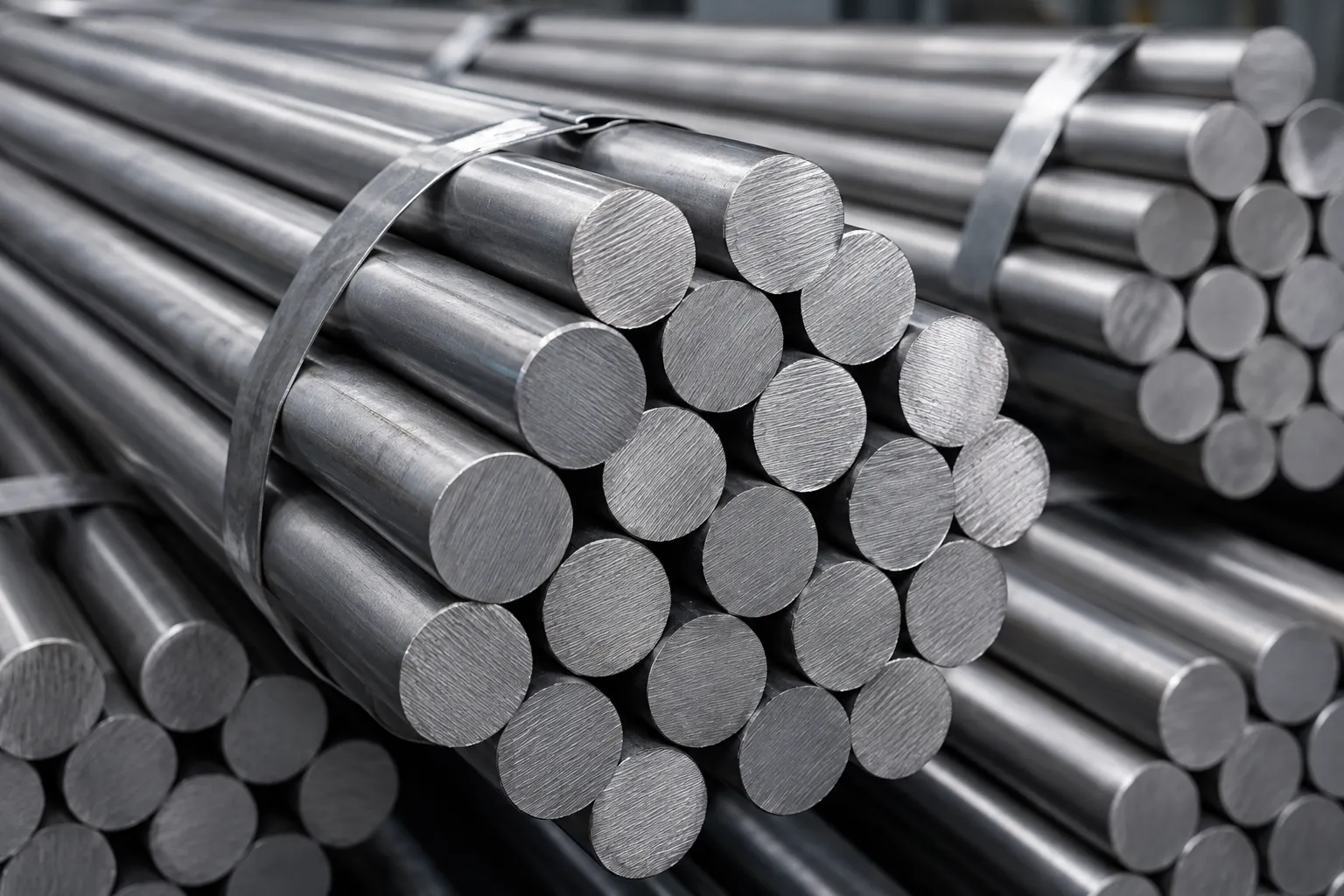
Alloy steel round bars manufactured around defined mechanical requirements.
Alloy steels use controlled additions of elements such as chromium, molybdenum, nickel or manganese to develop grade-specific combinations of strength, hardenability, toughness, wear behaviour and heat-treatment response. The correct alloy should therefore be selected against the required component properties rather than by grade name alone.
Takumi’s manufacturing enquiries begin with the required alloy steel grade and governing specification, followed by diameter, length, tolerance, supply condition, finish, heat treatment where applicable, testing, documentation, quantity and application requirements.
Understand the alloy system before selecting a grade.
The examples below are common industry references used to explain alloy-steel families. They do not confirm that Takumi currently manufactures every listed grade. Confirm current manufacturing capability before specifying an individual grade.
Chromium-Molybdenum Alloy Steel Round Bars
Chromium-molybdenum alloy steels are commonly considered where improved hardenability, strength and heat-treatment response are required for engineered components.
Nickel-Chromium-Molybdenum Alloy Steel Round Bars
Nickel-chromium-molybdenum grades are considered for demanding mechanical requirements where a combination of strength, toughness and through-section hardenability may be important.
Case-Hardening Alloy Steel Round Bars
Case-hardening alloy steels are selected for components that require a hard wear-resistant surface together with a tougher core, subject to the specified grade and heat-treatment route.
Chromium Alloy Steel Round Bars
Chromium-alloy grades may be specified where grade-specific hardenability, strength, wear response or heat-treated mechanical properties are required for machined components.
Manufacturing note: Grade names above are technical reference examples only. State the exact alloy steel designation, governing standard, dimensions, condition, heat-treatment requirement and testing scope in the enquiry so Takumi can confirm current manufacturing capability.
Define the requirement before manufacturing review.
Alloy steel round bar requirements should be defined by exact grade, governing standard, dimensions, supply condition, heat-treatment requirement and quality scope. Capability is reviewed against each enquiry.
| Requirement | What to Specify | Why It Matters |
|---|---|---|
| Alloy Grade | Exact alloy steel designation and the applicable JIS, EN, AISI/SAE or project designation where relevant. | Alloy chemistry influences hardenability, strength, toughness, wear behaviour and heat-treatment response. |
| Standard | Applicable material, dimensional or project-specific specification. | The governing specification defines the required material identity, condition, dimensions, properties and quality controls. |
| Diameter & Length | Required finished diameter, bar length and quantity. | Dimensions affect manufacturing review, machining allowance, handling and final component planning. |
| Tolerance | Required diameter, straightness or length tolerance where specified. | Finished component geometry and machining route may depend on clearly defined dimensional limits. |
| Supply Condition | State the required delivery or metallurgical condition where applicable. | Mechanical properties and subsequent machining or heat treatment depend on the specified condition. |
| Heat Treatment | Specify the required heat-treated condition or target mechanical requirement where applicable. | Alloy steels are frequently selected for their controlled response to heat treatment and hardenability. |
| Finish | Define the required surface or machining condition where specified. | Surface condition may affect machining allowance, inspection and downstream processing. |
| Testing & Documentation | State chemical, mechanical, hardness, inspection, traceability and documentation requirements as applicable. | Quality scope should match the governing standard, component criticality and project requirement. |
From alloy selection to a defined round bar manufacturing enquiry.
Alloy steel enquiries should clearly connect the required grade and heat-treatment condition with the dimensions, mechanical requirements, testing scope and finished component.
State the alloy steel grade
Provide the exact grade designation and any applicable equivalent or project designation without assuming interchangeability.
Define the governing specification
Identify the material standard, dimensional specification, customer specification or drawing requirements that govern the enquiry.
Specify diameter, length & tolerance
State the required dimensions, quantity and tolerance requirements so current manufacturing capability can be reviewed.
Confirm condition & heat treatment
Define the required supply condition, heat-treatment condition or mechanical-property requirement where applicable.
Define testing & documentation
Specify chemical, mechanical, hardness, inspection, traceability, certification or third-party requirements where applicable.
Explain the finished component
Include the intended component, loading or service requirement so material and condition can be reviewed in context.
Match the grade to the required mechanical response.
Alloy selection should be based on the finished component, section size, required properties and heat-treatment condition rather than on a familiar grade name alone.
Strength & Hardenability
Consider the required strength level and whether the component section needs sufficient hardenability to develop the specified properties.
Heat-Treatment Condition
Define whether the grade will be supplied or subsequently processed in a condition appropriate to the required mechanical properties.
Toughness & Fatigue Context
For dynamically loaded parts, material selection should consider the required balance of strength, toughness and fatigue performance.
Machining & Component Geometry
Section size, machining allowance, finished geometry and downstream processing can influence the appropriate alloy grade and supply condition.
Alloy steel round bars for high-demand engineering components.
This page keeps applications component-specific so the Industries page remains Takumi’s main authority for detailed sector applications.
Shafts & Spindles
For rotating or power-transmission components where strength, toughness, section size and heat-treatment condition are defined.
Gears & Pinions
For machined gear components requiring grade-specific hardenability, strength or case-hardening response.
Axles & Drive Components
For load-bearing drive components where mechanical performance and fatigue considerations influence material selection.
High-Strength Fasteners
For studs, bolts and fastening components where the specified grade, heat-treatment condition and mechanical requirements are clearly defined.
Pins & Bush Components
For pins and related machined components where wear, strength, toughness or surface-hardening requirements may apply.
Machine Components
For precision-turned or machined engineering parts requiring controlled alloy grade, dimensions and supply condition.
Heavy-Duty Couplings
For coupling and connection components where torque, strength, toughness and dimensional requirements must be considered together.
Engineered Load-Bearing Parts
For project-specific components where mechanical properties, traceability, documentation and inspection requirements are defined by the enquiry.

Define quality requirements with the enquiry.
Alloy steel enquiries may include material verification, dimensional, mechanical, hardness, inspection, traceability and documentation requirements that vary by grade, heat-treatment condition, standard and component criticality. State the required scope so current capability can be reviewed before quotation.
01What information should I provide for an alloy steel round bar enquiry?
Provide the exact alloy steel grade, applicable standard, diameter, length, tolerance, quantity, supply condition, finish, heat-treatment requirement where applicable, testing, documentation and intended component or application.
02Why are alloy steel round bars selected instead of carbon steel?
Alloy steels are selected when the component requires a grade-specific combination of hardenability, strength, toughness, wear response or heat-treatment performance that may not be achieved by the selected carbon steel grade. Final material choice should follow the required properties and governing specification.
03What does hardenability mean when selecting alloy steel?
Hardenability describes a steel’s ability to develop hardness through a section during heat treatment. It is different from hardness itself and becomes especially relevant when component size and through-section mechanical properties must be considered.
04Why should the heat-treatment condition be stated in an alloy steel enquiry?
Mechanical properties can change significantly with heat-treatment condition. Stating the required condition, or the mechanical-property requirement where applicable, helps ensure the manufacturing review is based on the actual finished-component requirement.
05Does Takumi manufacture every alloy steel grade shown on this page?
No blanket availability claim is made by this page. The grades shown in the family section are common industry examples used for technical guidance. Confirm the required grade, standard, dimensions, condition, heat-treatment requirement and testing scope with Takumi before ordering.
Discuss your alloy steel round bar requirement.
Send your grade, standard, diameter, length, tolerance, supply condition, quantity, heat-treatment requirement where applicable, mechanical requirements, testing, documentation and application details for technical review and quotation.